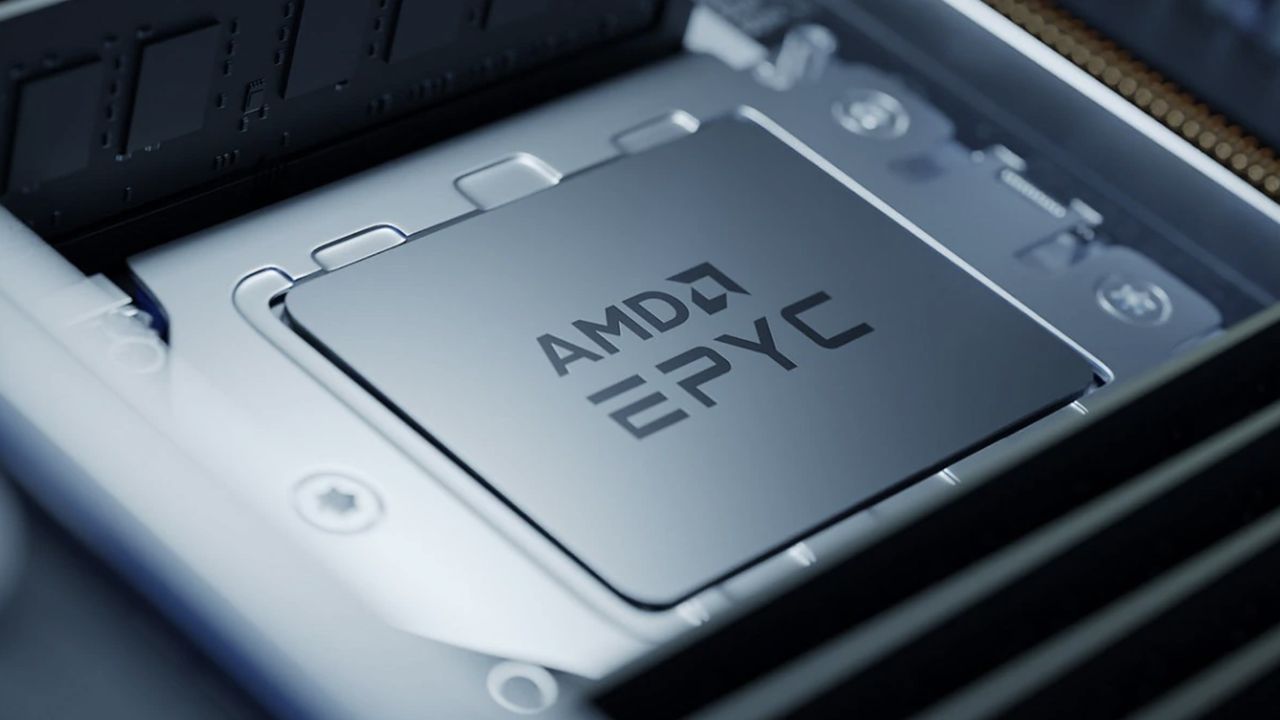
AMD is taking the fight to Intel with its most powerful Epyc chips yet — Sorano packs in 84 Zen5 cores and could supercharge the next generation of mobile networks
Summary
AMD has unveiled its 84-core Sorano Epyc chip, targeting telecom networks with a focus on efficiency. This move challenges Intel's dominance in virtualized infrastructure, marking a significant advancement in processing power for the industry.
Key Insights
What is vRAN and why is the AMD Sorano Epyc chip designed for it?
vRAN (virtualized Radio Access Network) is a software-based approach to running 5G mobile network functions on standard server hardware instead of proprietary systems, enabling greater flexibility and efficiency in telecom deployments. The Sorano Epyc 8005-series chip, with up to 84 Zen 5 cores in a 225W power envelope, targets vRAN workloads like compute-intensive Layer 1 processing and LDPC decoding to improve network capacity and energy efficiency in edge and telco environments.
What are Zen 5 cores and how do they differ from previous generations in Epyc chips?
Zen 5 cores are AMD's latest CPU microarchitecture in the Epyc 8005 'Sorano' series, featuring up to 84 cores per socket (up from 64 in the prior Siena generation), a full 512-bit data path for vector instructions, and optimizations like improved LDPC decoding for 5G. These dense-core designs prioritize throughput, low latency, and power efficiency (up to 225W TDP) for single-socket telco and edge servers, outperforming predecessors in vRAN workloads.