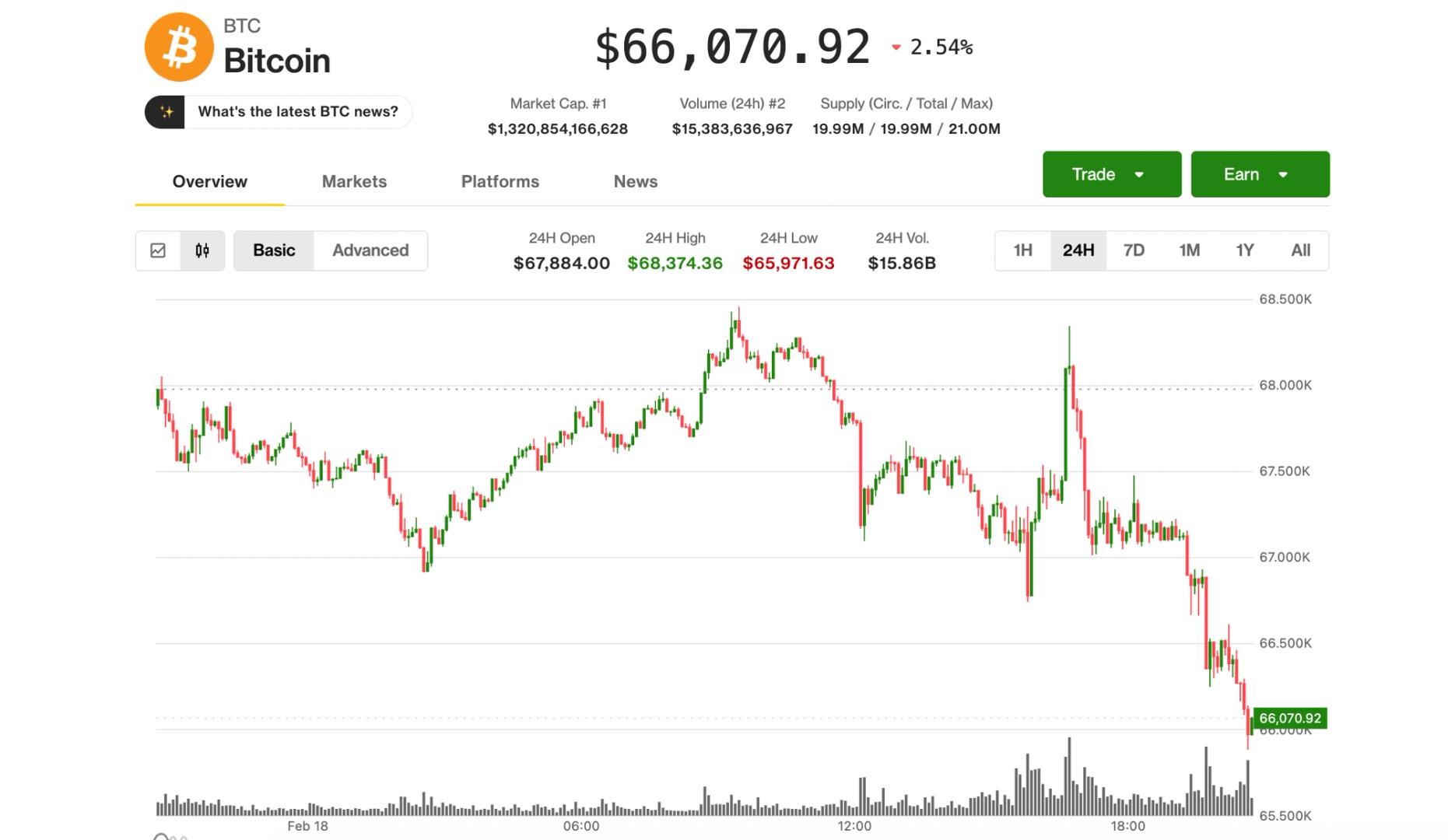
Bitcoin sinks to $66,000, U.S. stocks lose steam as Fed minutes mention possible rate hike
Summary
Bitcoin is poised for its fifth consecutive weekly decline, raising concerns that a further drop could lead to significant losses. Analysts warn that failing to maintain current levels may trigger a new downward trend in the cryptocurrency market.
Key Insights
Why does the Federal Reserve's interest rate policy affect Bitcoin's price?
The Federal Reserve's interest rate decisions influence Bitcoin through multiple interconnected mechanisms. When the Fed raises rates, borrowing becomes more expensive, which reduces the amount of capital available for speculative investments like Bitcoin. Higher rates also strengthen the U.S. dollar, making Bitcoin more expensive for international investors. Conversely, when rates are low, cheap borrowing and increased liquidity encourage investors to seek higher returns in riskier assets, including Bitcoin. Additionally, Bitcoin's price is sensitive to real interest rates (the nominal rate adjusted for inflation) and the Federal Reserve's balance sheet size, which affects the overall liquidity available in financial markets. Market sentiment also plays a role—unexpected rate hikes can cool investor enthusiasm, while anticipated rate cuts may spark optimism that lifts Bitcoin alongside other risk assets.
What does it mean when markets are pricing in rate cuts that differ from the Federal Reserve's guidance?
When market expectations for Federal Reserve rate cuts diverge from the Fed's official guidance, it creates uncertainty that can destabilize asset prices, including Bitcoin. Currently, markets are pricing in approximately 63 basis points of cuts for 2026—implying two to three rate reductions—while the Federal Reserve has signaled only one cut. This disconnect occurs because traders and investors form their own expectations based on economic data, inflation trends, and Fed communications, and they adjust their positions in anticipation of future policy moves. When the actual Fed decision differs from what markets have priced in, it can trigger sharp price movements as investors reassess their positions. This 'priced in' effect means that if a widely expected rate cut actually occurs, the announcement may produce little market reaction or even a counterintuitive one, as investors have already adjusted their holdings beforehand. The uncertainty surrounding this gap between market expectations and Fed guidance remains a core volatility risk for Bitcoin and other risk assets.