Canada, California, & Europe: Three Ways to Force EV Adoption
Summary
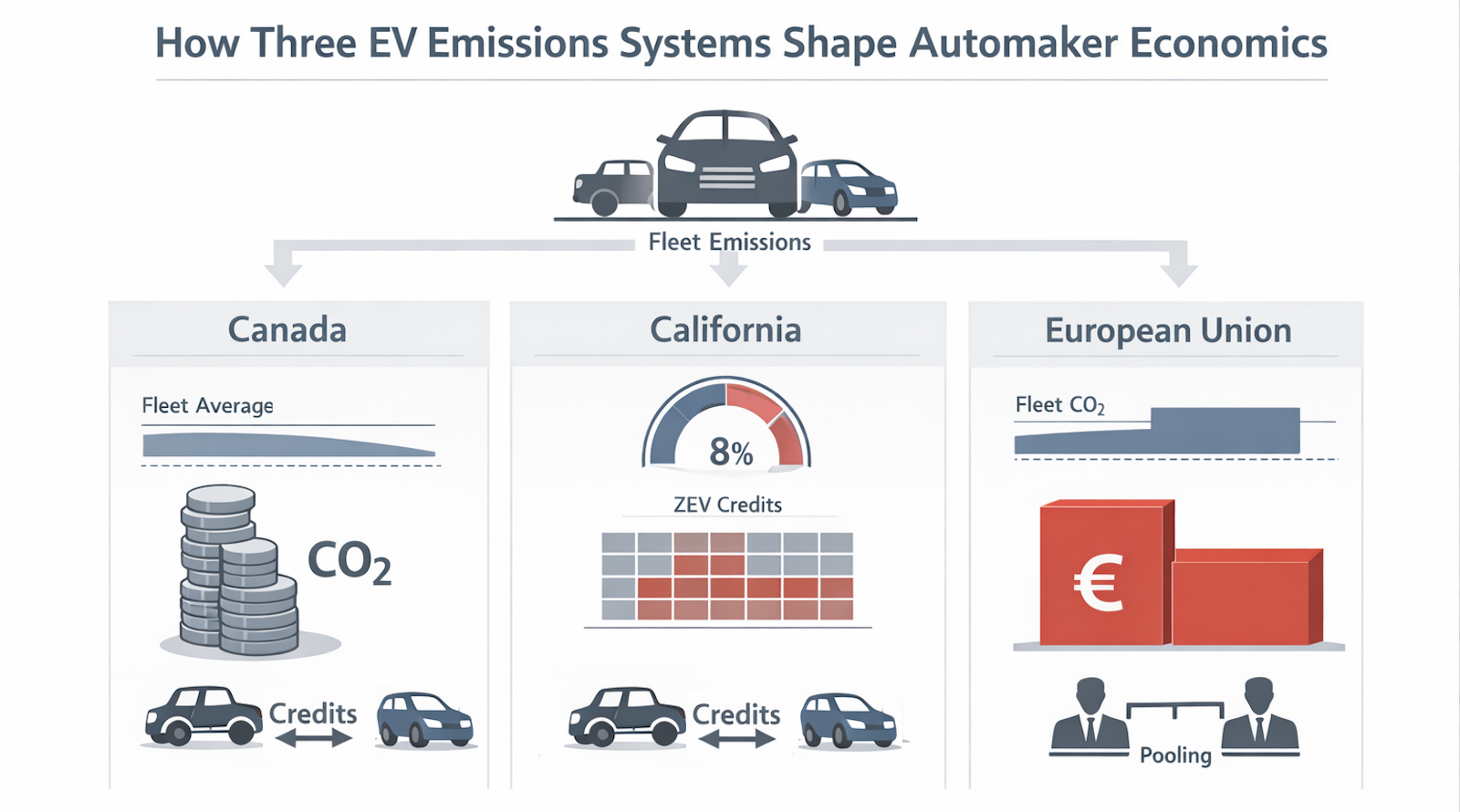
Canada's recent shift in electric vehicle policy emphasizes stricter fleet average emissions standards and credit trading, moving away from a direct sales mandate. This strategic change aims to enhance EV adoption, aligning with similar efforts in California and Europe.
Key Insights
What is the difference between Canada's former EV Availability Standard and the new fleet average emissions standards?
The former Electric Vehicle Availability Standard mandated a direct percentage of EV sales, such as 20% emissions-free vehicles by 2026 and 100% by 2035, which has been repealed. The new approach sets stricter fleet average greenhouse gas emissions standards across all vehicles sold by a manufacturer, allowing credit trading and a mix of technologies like EVs (counting as zero emissions) and others to meet tightening targets annually, aiming for 75% EV sales by 2035.
How does Canada's new EV Affordability Program determine eligibility for rebates?
Eligibility is based on the vehicle's final transaction value of $50,000 or less for non-Canadian-made EVs (no cap for Canadian-made), with up to $5,000 for battery-electric and fuel cell EVs, and up to $2,500 for plug-in hybrids, available for vehicles made in Canada or countries with free trade agreements.