Hubble Space Telescope captures the stunning final breaths of a dying star
Summary
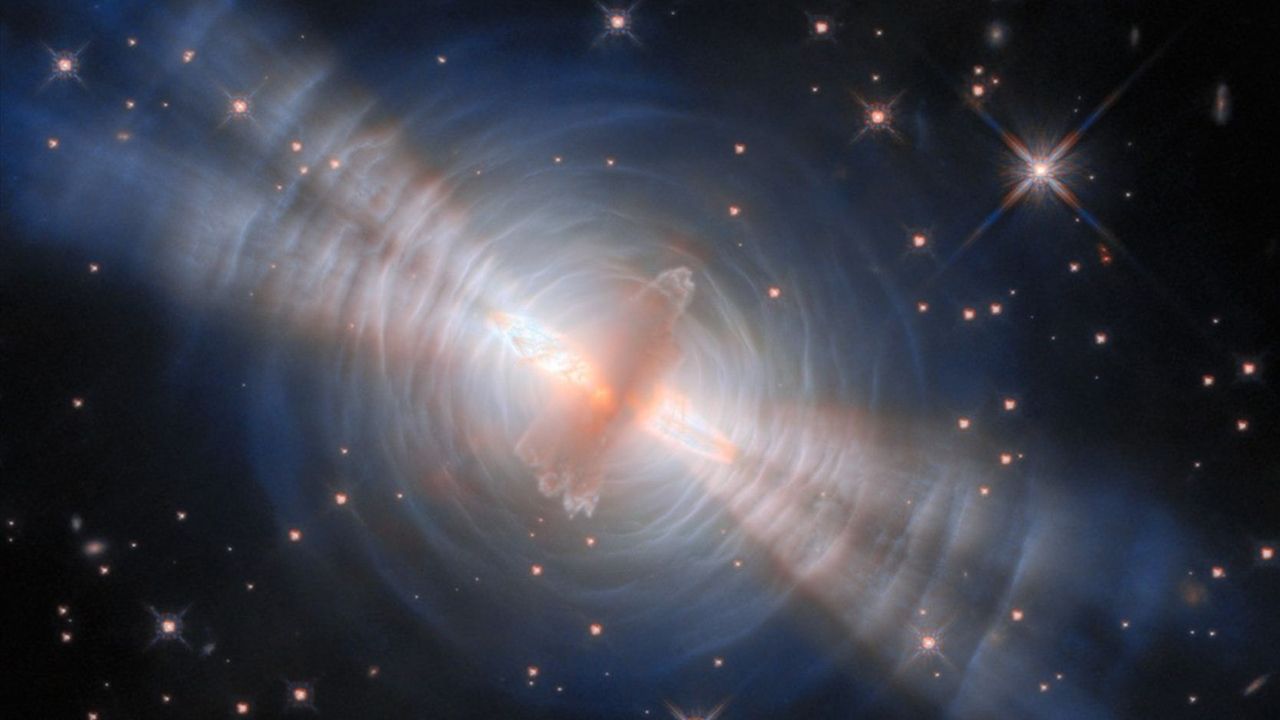
The Egg Nebula features a deteriorating sun-like star at its core, often referred to as its yolk. This intriguing celestial phenomenon captivates astronomers and stargazers alike, highlighting the dynamic processes of stellar evolution in our universe.
Key Insights
What is the pre-planetary stage of a star like the one in the Egg Nebula?
The pre-planetary stage is a brief transitional phase lasting only a few thousand years, where a sun-like star has shed its outer layers but its exposed core has not yet become hot enough to ionize the surrounding gas, unlike fully formed planetary nebulae such as the Helix or Butterfly.
Why does the Egg Nebula shine, and what causes its unique light patterns?
The Egg Nebula shines by reflecting light from its central star, which escapes through a polar 'eye' in the surrounding dust from a dusty disk expelled just a few hundred years ago; this illuminates fast-moving polar lobes and concentric arcs formed by successive ejection bursts, creating a dramatic interplay of light and shadow.