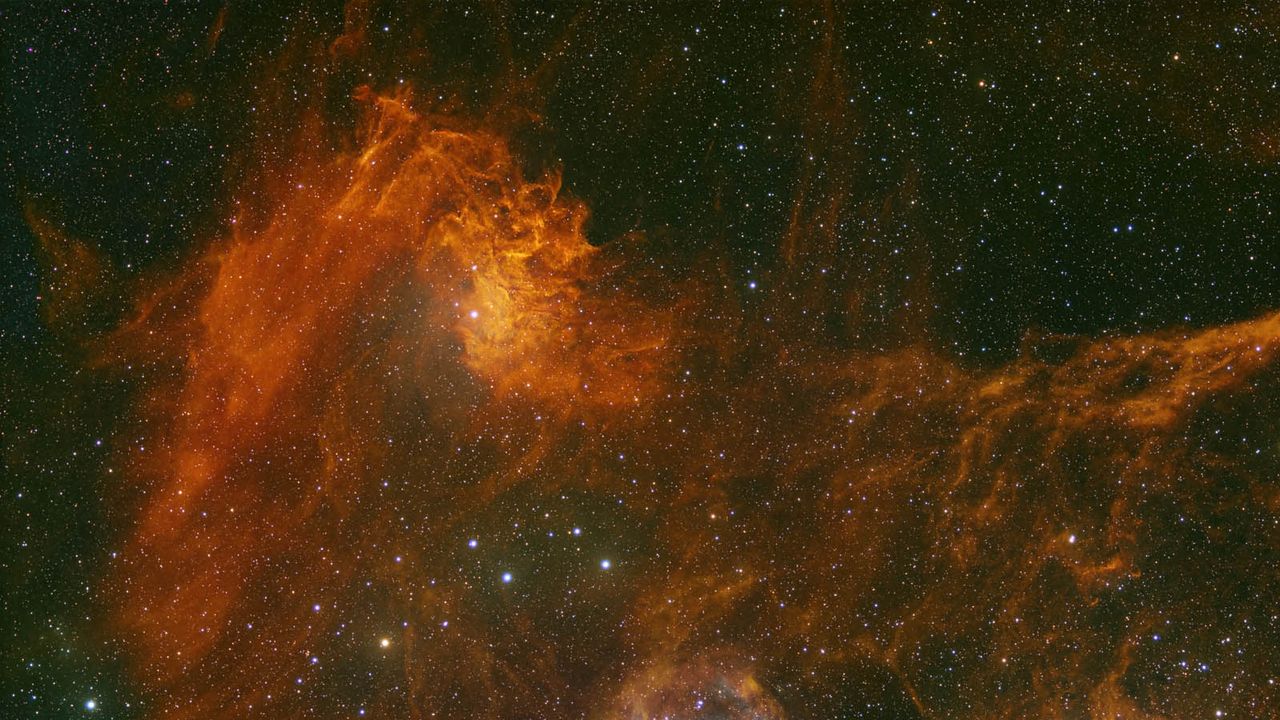
Astrophotographer captures the 'Flaming Star Nebula' ablaze in deep-space (photo)
Summary
Ionized clouds create a stunning visual effect, resembling flames encircling the star AE Aurigae. This captivating phenomenon highlights the beauty and complexity of stellar environments, drawing interest from both astronomers and space enthusiasts alike.
Key Insights
Why is the Flaming Star Nebula not actually on fire despite its name?
The nebula appears flame-like due to rippling dust and gas illuminated by the hot blue star AE Aurigae, but there is no fire because fire requires oxygen, which is absent in these high-energy, low-oxygen stellar environments; instead, the colors result from ionized gas emitting light and dust reflecting starlight.
What causes the red and blue colors in the Flaming Star Nebula?
The red emission nebula forms when energetic light from AE Aurigae ionizes surrounding hydrogen gas, knocking away electrons that later recombine and emit red light; the blue reflection nebula arises from dust reflecting the star's blue light mixed with some red emission.