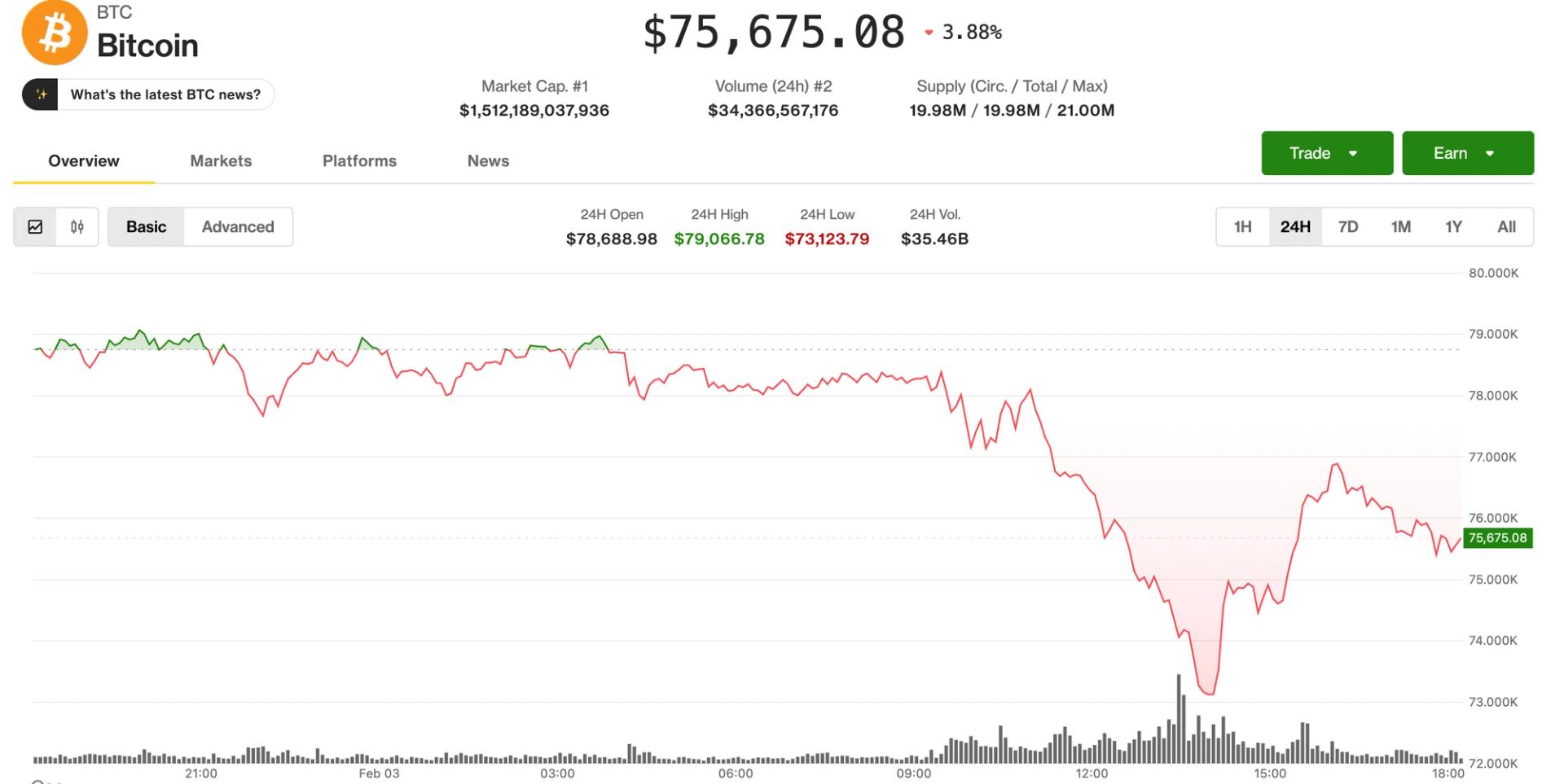
Bitcoin’s wild Tuesday: From a 14-month low to a sharp rally triggers $740 million in liquidations
Summary
Analysts warn that Bitcoin's inability to recover quickly may lead to significant market volatility in the coming year. This situation could create both challenges and opportunities for investors navigating the ever-evolving cryptocurrency landscape.
Key Insights
What are liquidations in cryptocurrency markets, and why do they occur during sharp price movements?
Liquidations occur when traders using borrowed money (leverage) are forced to sell their positions because the price moved against them and they can no longer meet their margin requirements. When Bitcoin experiences sudden price swings—like dropping to a 14-month low then rallying sharply—traders who bet on price direction using leverage face automatic position closures. This creates a cascading effect: as positions are liquidated, it forces more selling, which can trigger additional liquidations. In early 2026, Bitcoin fell below $80,000 support, triggering $2.6 billion in liquidations, and similar events have occurred throughout the year as leverage in the market gets "flushed out." These liquidation waves amplify volatility because they're mechanical rather than based on fundamental changes in Bitcoin's value.
Why is Bitcoin's inability to recover quickly from price drops significant for market volatility in 2026?
Bitcoin's recovery speed matters because it signals market health and investor confidence. When Bitcoin drops sharply but recovers quickly, it suggests strong underlying demand and institutional support. Conversely, slow or failed recoveries indicate weak liquidity and hesitant buyers, which can perpetuate downward pressure. In early 2026, on-chain metrics like the Realized Profit/Loss Ratio fell below 2, indicating fragile liquidity and subdued profit-taking, meaning fewer investors are willing to buy at lower prices. Additionally, ETF outflows and weak institutional demand have reduced the stabilizing forces that typically support the market during downturns. This combination—slow recovery, thin liquidity, and absent institutional buying—creates conditions for prolonged volatility rather than quick bounces, making it harder for the market to establish a clear direction and increasing uncertainty for investors throughout 2026.