Germanium Semiconductor Made Superconductor by Gallium Doping
Summary
An international team of scientists has transformed germanium, a common semiconductor, into a superconductor by doping it with gallium. This breakthrough, achieved through molecular-beam epitaxy, marks a significant advancement in material science, though room-temperature superconductors remain the ultimate goal.
Key Insights
What is doping and how does it enable superconductivity in germanium?
Doping is the process of intentionally introducing impurity atoms, like gallium, into a semiconductor's crystal lattice to alter its electrical properties. In this case, hyperdoping germanium with gallium at high concentrations (up to one in eight atoms) substitutes Ga atoms for Ge atoms, shifting the Fermi level and creating a narrow electronic band that enables superconductivity at temperatures up to 3.5 K.
What is molecular beam epitaxy (MBE) and why was it used here?
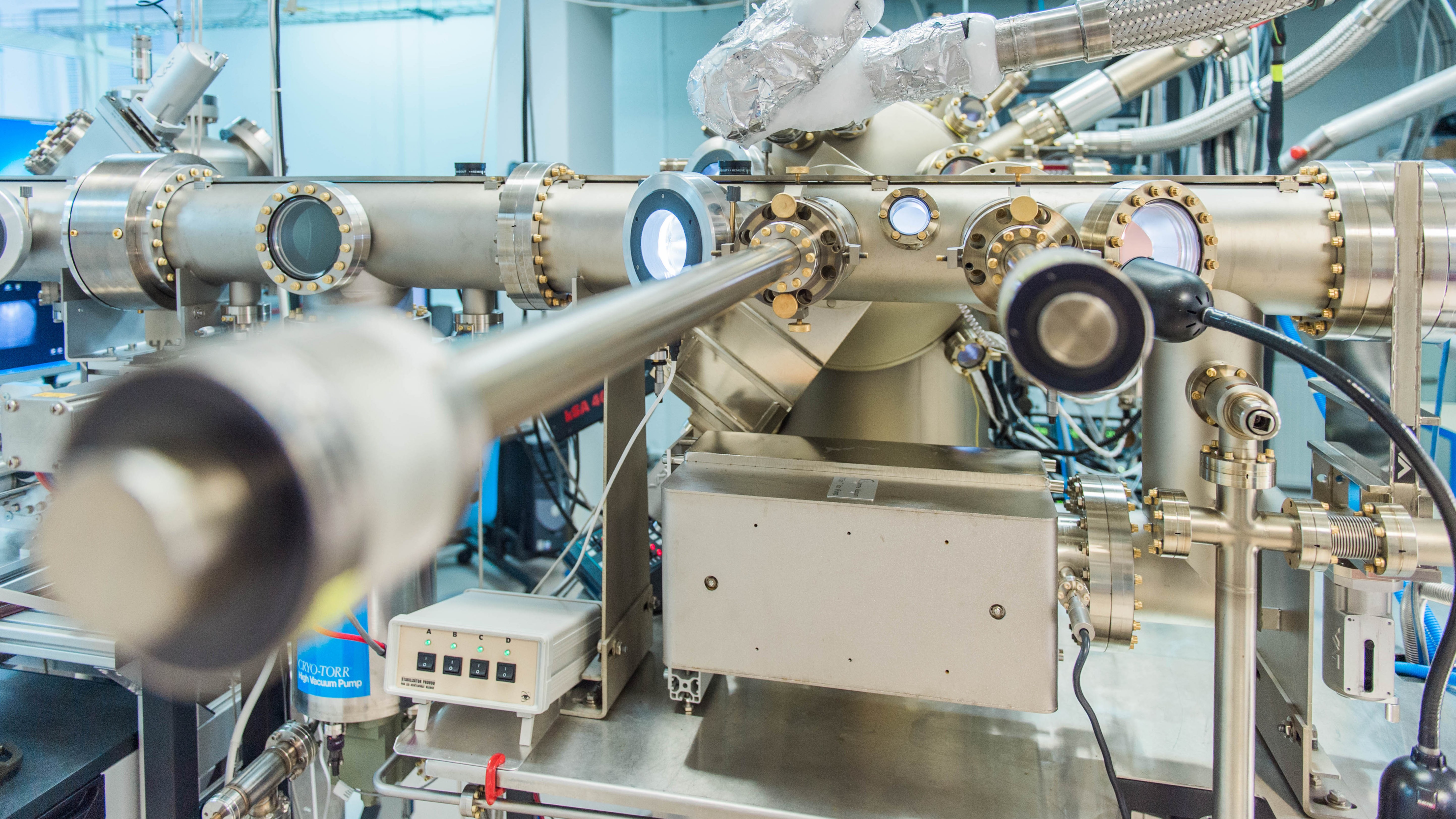
Molecular beam epitaxy (MBE) is a precise technique for growing high-quality thin crystal layers by directing molecular beams of atoms onto a heated substrate in an ultra-high vacuum. It was used to hyperdope germanium with gallium substitutionally into the lattice, avoiding defects, clustering, and instability common in other methods like ion implantation, thus enabling stable superconductivity.